

Folks who know me know I’m a bit of a movie snob. Not the kind who fixates on obscure films no one’s seen (annoying), but the kind who’s watched a ton of films, and has opinions on them all (just as annoying :).
I love movies... well… I love good movies… which really means, I love movies I think are good.
That love led me to pursue a Masters degree in Film & Video from Emerson College, which had me watching even more movies, and learning the craft of the directors who made them.
There are many wonderful parallels between making a movie and making a life, and I’ve often turned to the wisdom of cinephiles to inform my approach to both, with generally good results.
Below are a few examples:
Slow Down
Perhaps best known for his writing (particularly the films Taxi Driver and Raging Bull) Paul Schrader is also a director in his own right. One of his best directed films, in my opinion, is the 2017 psychological thriller First Reformed.
“Thriller” may be a bit of a force, the film is much more of a slow burn. But, as Paul’s advice reminds us:
“Good things happen when you slow down.”
It was true with First Reformed, which despite its slow pace became Schrader’s most lauded directorial effort, and it’s true for most other things in life.
When we slow down we become more present. When we slow down, we become more steady. When we slow down, we can enjoy the moment that is happening in front of us.
But our modern technology and lifestyles have sped us up so much. From trains, planes and automobiles to fiber optics and microchips the need for speed has permeated every facet of our culture. Speed has become synonymous with progress, power, success and freedom. The logic being, if we can can do things faster, we can make more, work less, and have more free time to enjoy.
But what if that’s wrong?
Play a film at 5x its speed and it only makes it shorter and harder to appreciate. The same goes for life. Cars may make travel faster, but when everyone has one, we all end up in traffic. Fast food may save you time on meal prep, but it’ll most likely shorten your lifespan. High-speed internet may bring the digital world to us in an instant, but all the while our actual world is passing us by.
In our rush to avoid missing out on things, we miss the opportunity to be present for them. In our fear of being left behind, we abandon our own peace of mind.
All this to say, perhaps being as fast as a speeding bullet isn’t the silver bullet we all thought it was.
Why then, do we rush?
I wonder if our addiction to speed is due to our dissatisfaction with where we are.
We wish to speed thru the hard parts, skip the mundanity, and leap-frog the struggle. But by slowing down the patience, resilience, experience and appreciation will reveal the lessons within these things. And the beauty too.
Go Hard
Speaking of NOT speeding through the hard parts, German filmmaker and photographer Wim Wenders gives the exact opposite advice by encouraging us to “tackle the tough stuff first”.
Wenders’ film credits include Wings of Desire, the documentary Buena Vista Social Club and my favorite - Paris, Texas. Released the same year as my birth, Paris, Texas is essentially a road film about a man in search of his baby mama.
While the film and its premise doesn’t have much of a connection to Wenders’ directorial advice (trust me I tried to find one) the film itself is one of the many that inspired me to make my own. And it was in the process of making my own feature that the wisdom behind Wenders’ advice became clear.

When scheduling principle photography for my feature film Come On In, both my AD and Producer suggested we shoot the sequence that bookends the movie on the first day of filming. It seemed completely counterintuitive. This sequence was going to be by far the most complicated, labour intensive and potentially dangerous shot in the entire film. The shot required us to rent out an entire YMCA swimming pool, sink two giant black tarps to black out the walls and floor of the pool, rent scuba diving equipment and set up several massive HMI lights angled down onto the water to light the shot. As you know, electricity and water don’t mix. If any of the lights were to fall into the pool, anyone in the water (me, my DP, lifeguard and camera OP) would be electrocuted instantly.
My Gaffer held all of our lives in his hands. My life guard held mine in his.
Because, you see, I can’t swim.
As a child I nearly drowned in a public pool one summer when visiting my cousins (a tale for another time). Ever since then, any stressful situation in life has brought back that memory of sinking underwater. The experience became a life-long metaphor for panic. And so when I went to write this film, about an artist suffering a mental crisis, I knew exactly how I’d show it. Him drowning. It was perfect…
…Until the writer in me realized, that the director in me had cast the actor in me to play the lead, which meant my no-swimming ass would need to get back into a pool and nearly drown, again.
And THIS was what my Producer and AD wanted me to do my first day on the job of shooting my first feature-length film. I thought they were batshit crazy. But I relented. And I thought I was batshit crazy. And I was.
But we did it.


It seems counterintuitive to start with what is the hardest and most difficult. We often want to reach for the lowest hanging fruit, to gain some momentum and work our way up to what is difficult. Starting with something hard may make us give up. May make us push our schedule back. May backfire.
But there is no moment when you will have more motivation, buy-in, energy, and momentum than that first day of shooting. So start with the tough stuff first.
It took us 48 days spread over more than a year to complete principle photography for Come On In. By day #2 I was exhausted. Had we waited till later to shoot that scene, when half my crew had shuffled out, and our budget was nearly all spent, and my professors were all growing concerned, and I could barely remembered why I even wanted to shoot this thing to begin with, we wouldn’t have had a chance in the world to pull that first day’s shoot, and all its prep, off.
Doing that scene was a lot like burning your boats after landing on shore. There was no going back after that, and I imagine that was why My AD and Producer had been so adamant about starting with it. They knew what Wim Wenders did; that by starting with the hardest thing first, you were more likely to get to the end.
Watch Come On In now on Apple TV!
Be Intentional:
There’s that saying: “the road to hell is paved with good intentions” meaning good intentions do not equate to being or doing good. There is often a gap between what we intend and what we actually execute, and the devil is in the details. While there is truth to this, the importance of intention can’t be overstated. Good intentions may not always lead to good results but they certainly do better than bad intentions ever will.
Often the problem is not that our intentions are bad but that they are ambivalent, unclear, underdeveloped. Ava’s advice to zero in on our intention and allow it to guide our behavior, goals and plans, (rather than the other way around) has become so key for me.
Ava DuVernay is as inspirational as it gets. For all the late bloomers out there (me included), Ava didn’t pick up a camera until she was 32. Before then she was creating her own PR firm (The DuVernay Agency) and promotional network (Urban Beauty Collective) made up of over 10,000 African-American beauty salons and barbershops across 20 states. When she did start directing films, she distributed them through her own production company.
Her 2014 film Selma (my personal favorite), depicted the stories of the Black activists at the center of the civil rights movement. The film would be the first directed by a Black woman to be nominated for best picture at the Academy Awards.
She then moved to television show-running the series Queen Sugar, with an all-female directorial team that won multiple NAACP Image Awards for outstanding drama. She followed that up with the Emmy Award-winning Netflix miniseries When They See Us about the exonerated Central Park Five.
DuVernay founded ARRAY, a non-profit independent film collective devoted to distributing and amplifying the works of women and minority filmmakers.
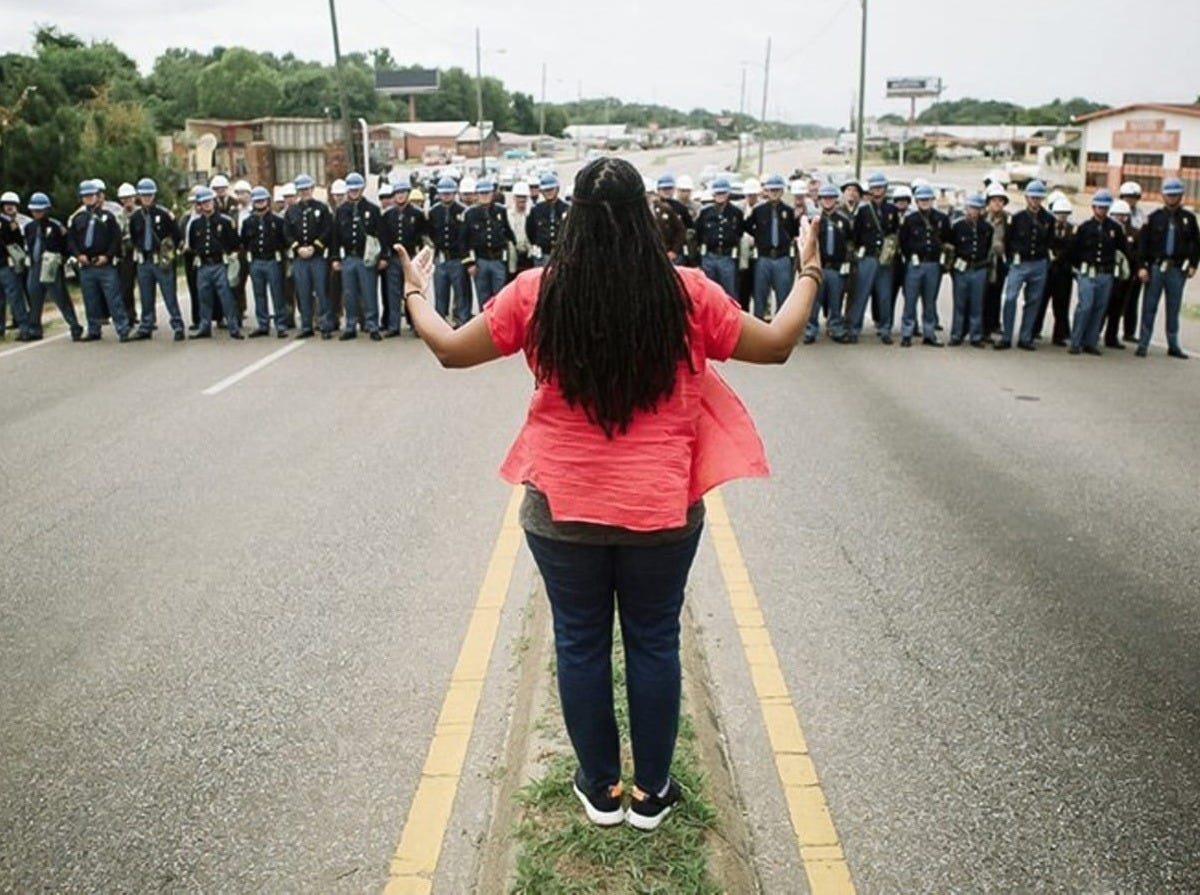
All throughout her work, both on and off screen, is a clear intention to uplift and present the stories, storytellers, and humanity of her people. That focus on intention has lead to an outsized impact on the film industry and the Black community as a whole.
Care
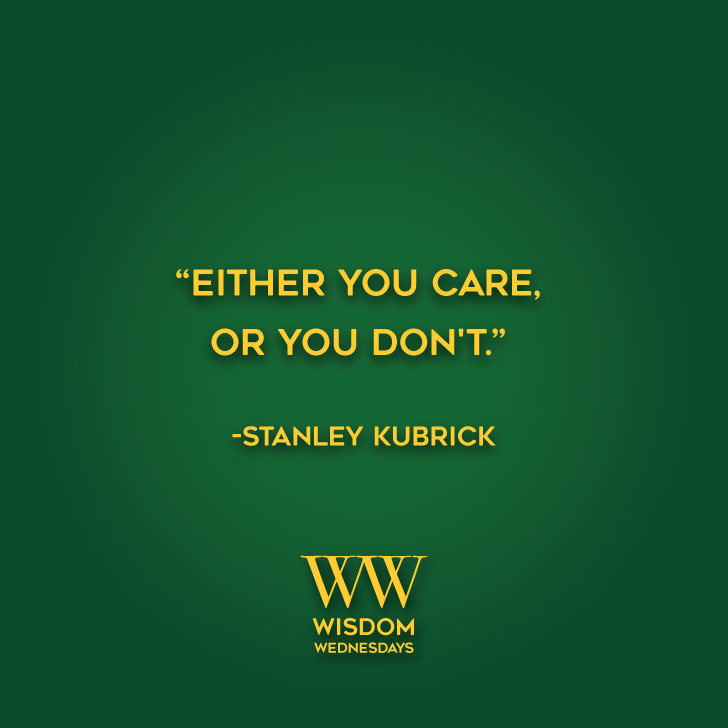
Stanley Kubrick always had a way of making things plain. Not simple, but plain. As cryptic and reserved as he was, the American director had a knack for addressing the most complex subjects such as war, sex, and history through his filmography.
Considered one of the most influential and important filmmakers of the 20th century, Kubrick was known for his meticulous, near obsessive approach to filmmaking. He became notorious for pushing his actors and crew to their brink with his many takes and exacting standards one might assume he was the kind of cruel, apathetic, control freak that gives directors a bad rap. And maybe that’s partly true. But, the more I learned about him the more I saw that his meticulousness came not from apathy but a deep, deep sense of care. Kubrick cared about his craft. He cared about his material and he cared about his audience. That care was unrelenting, but it made him, his films and all those who were involved better. Which perhaps was why, despite his reputation, generational actors such as Marlon Brando, Kurt Douglas, Tom Cruise, Jack Nicholson, And Nicole Kidman all lined up to work with him. The dichotomy is perhaps best expressed by Michael Herr, one of the many screenwriters who worked with Kubrick:
They work with Stanley and go through hells that nothing in their careers could have prepared them for, they think they must have been mad to get involved, they think that they’d die before they would ever work with him again, that fixated maniac; and when it’s all behind them and the profound fatigue of so much intensity has worn off, they’d do anything in the world to work for him again. For the rest of their professional lives they long to work with someone who cared the way Stanley did, someone they could learn from. They look for someone to respect the way they’d come to respect him, but they can never find anybody ... I’ve heard this story so many times.
— Michael Herr, screenwriter for Full Metal Jacket on actors working with Kubrick.
While I don’t think you have to be maniacal about it, I do think the only way you can be great at anything is if you really care about it.
The world needs people who care.
Be one of them.
∞
Till then, Be art.
-Daniel
Thank you for the wisdom!